
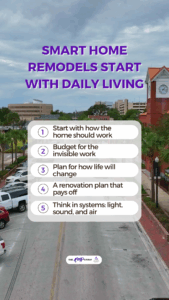
A truly successful home transformation begins with a shift in perspective: don’t start with the aesthetic, start with the utility. By prioritizing layout, internal systems, and future flexibility, you ensure your investment delivers lasting comfort, structural integrity, and tangible value.
Prioritize Flow Over Finishes
The most common remodeling regrets aren’t about choosing the wrong paint color—they’re about ignoring the “friction points” of a home. Before browsing Pinterest, audit your daily habits. Where does the hallway bottleneck? Where does clutter naturally pile up?
-
Identify the “Pain Points”: Walk through your home during a busy morning. Note where people collide or where lighting feels insufficient.
-
Design for Your Routine: A “personalized design-build” approach recognizes that no two families use a kitchen the same way. Whether it’s optimizing a cooking triangle or widening a walkway, function-first planning prevents beautiful designs from becoming daily nuisances.
Invest in the “Invisible” Infrastructure
A flawless surface can’t hide failing systems for long. To protect your investment, you must budget for the work hidden behind the drywall.
-
Audit the Skeleton: Older homes frequently require electrical upgrades, modernized plumbing, or improved structural framing before the “pretty” layers are applied.
-
The Contingency Clause: Demolition often reveals hidden moisture damage or outdated wiring. Building a financial buffer allows you to fix these issues correctly rather than masking them, saving you thousands in future repairs.
Design for Your Future Self
A smart remodel solves today’s inconveniences without creating tomorrow’s obstacles. High-performance homes are adaptable.
-
Universal Design: Consider wider transitions and accessible layouts that allow for “aging in place” or changing mobility needs.
-
Multi-Purpose Spaces: A guest room that functions as a quiet office or a dining nook that handles homework ensures your square footage works harder for you.
-
Durable Materiality: Choose moisture-resistant surfaces and easy-clean finishes that maintain their “day one” look long after the contractor leaves.
Master the Environmental Systems
True comfort is felt, not just seen. When you alter a floor plan, you also alter the home’s ecosystem of light, sound, and air.
-
Layered Lighting: Move beyond a single ceiling fixture. Combine ambient, task, and accent lighting to reduce eye strain and define different zones.
-
Acoustic Privacy: Use solid-core doors and strategic insulation to manage sound travel, especially in open-concept layouts.
-
Climate & Air Quality: Ensure your HVAC system is calibrated for the new footprint and that high-moisture areas—like kitchens and baths—are properly vented to prevent mold and stale air.
A remodel is a sequence, not a sprint. By respecting the order of operations—demolition, infrastructure, then finishes—and securing the necessary permits, you safeguard your home’s resale value and your family’s safety. The best renovation is one that continues to perform long after the reveal.