
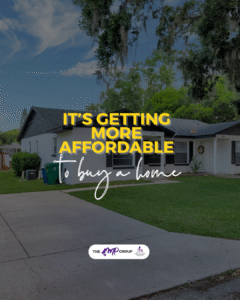
If you’ve been sidelined by skyrocketing costs over the last few years, there is finally a reason for optimism. While the market isn’t “cheap” yet, the intense pressure on buyers is starting to lift, and the math of homeownership is beginning to make sense again.
Housing Costs Are Heading in the Right Direction
To understand this shift, economists look at the percentage of household income required to own a home. Zillow defines “affordability” as spending 30% or less of your monthly income on housing costs (mortgage, taxes, and insurance).
For years, that number was far above the 30% mark, locking many people out of the market. Now, data shows we are finally trending back toward that balance. While we haven’t hit the 30% sweet spot quite yet, the burden on the average household is lighter than it was just a few years ago.
Three Trends Driving This Shift
Why is the market finally cooling off? It isn’t just one factor; it’s a combination of three key economic shifts:
-
Mortgage Rates are Easing: Rates have reached their lowest levels in over three years, which directly lowers your monthly payment.
-
Price Growth has Stabilized: National home prices aren’t necessarily dropping, but they are no longer surging. This predictability makes it much easier for buyers to plan.
-
Wages are Outpacing Prices: This is the “secret sauce” for 2026. As Mark Fleming, Chief Economist at First American, notes: “When income growth exceeds house price growth, house-buying power improves—even if mortgage rates don’t decline meaningfully.”
“Affordability won’t snap back overnight, but like a ship finally catching a steady tailwind, it’s now sailing in the right direction.” — Mark Fleming
Where is it Improving Fastest?
Affordability is a local story. While some major markets are expected to fall back below that 30% income threshold by the end of 2026, many other regions are seeing significant improvements right now.
The “squeeze” of the last few years is finally loosening. This is a meaningful shift for anyone who thought they were permanently priced out.
Because real estate is hyper-local, these national trends might look different in your specific neighborhood. If you want to see exactly how much more buying power you have today compared to last year, let’s connect and look at the local numbers.